



Las Batuecas Cave Paintings.
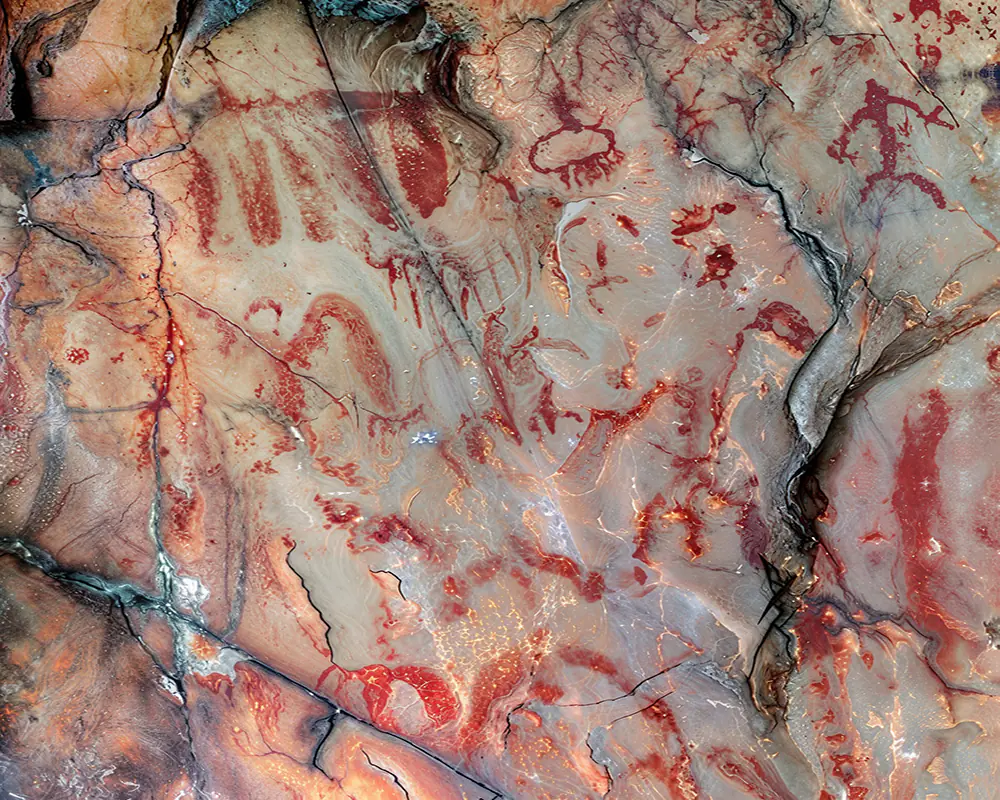
In the municipality of La Alberca there are numerous rock shelters that house cave paintings between 7000 and 5000 years old (Neolithic and Chalcolithic periods).
Although some are of a naturalistic type, they are generally extremely schematic, made with linear strokes and flat inks, mainly in red and ochre colors and, to a lesser extent, in black, white and yellow.
These paintings are mostly abstract renderings made of simple lines and dots, although there are also figures of people, animals, and elements of nature.
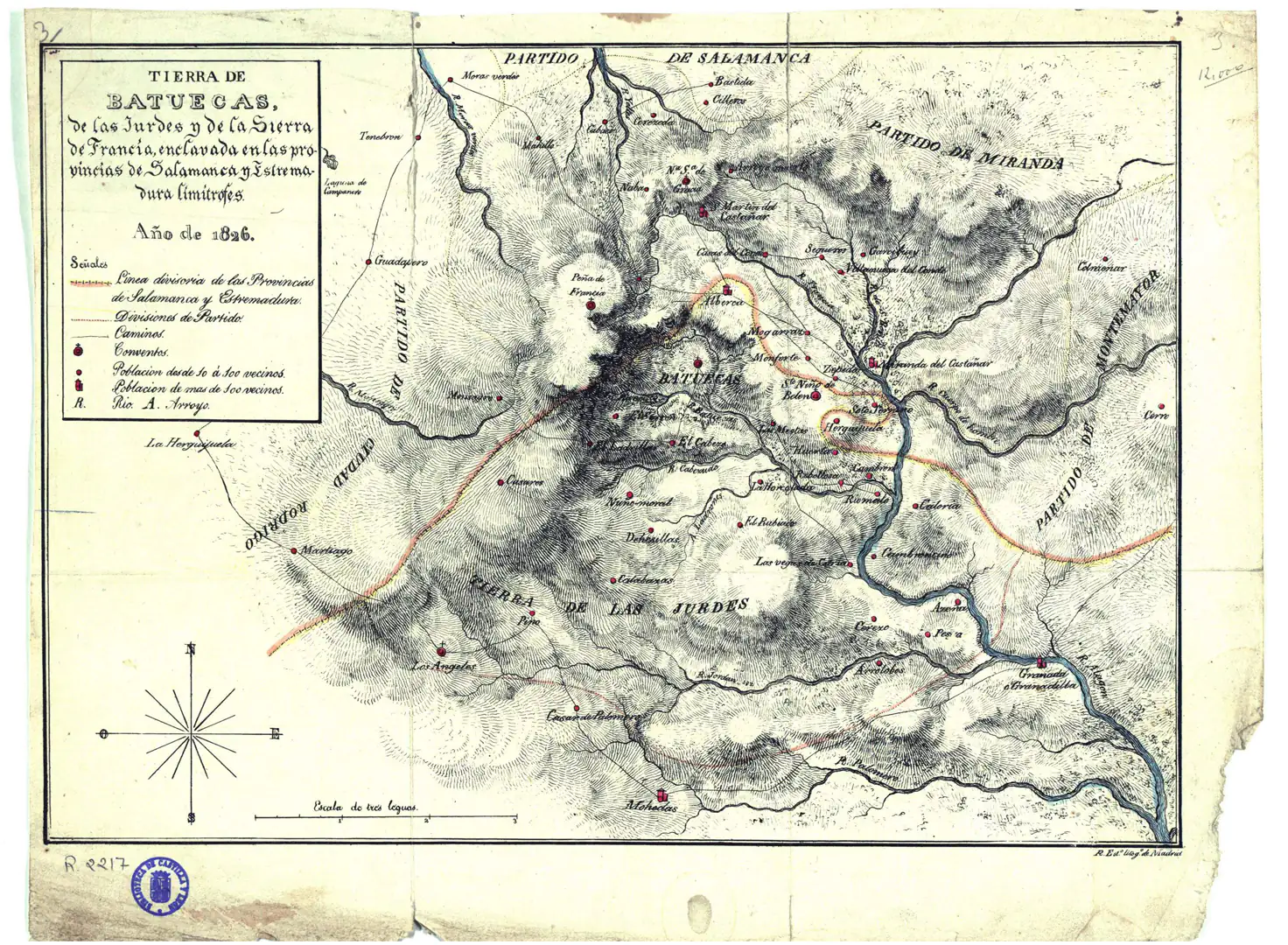
Map of Las Hurdes, Las Batuecas and Sierra de Francia (1826).
In 1288, the town of Granada ceded the control over Las Batuecas and the Upper Hurdes region to La Alberca.
For more than 500 years, La Alberca exercised its rights over these territories, even levying an annual tax on the townspeople, which was a continuous source of tension between the two communities.
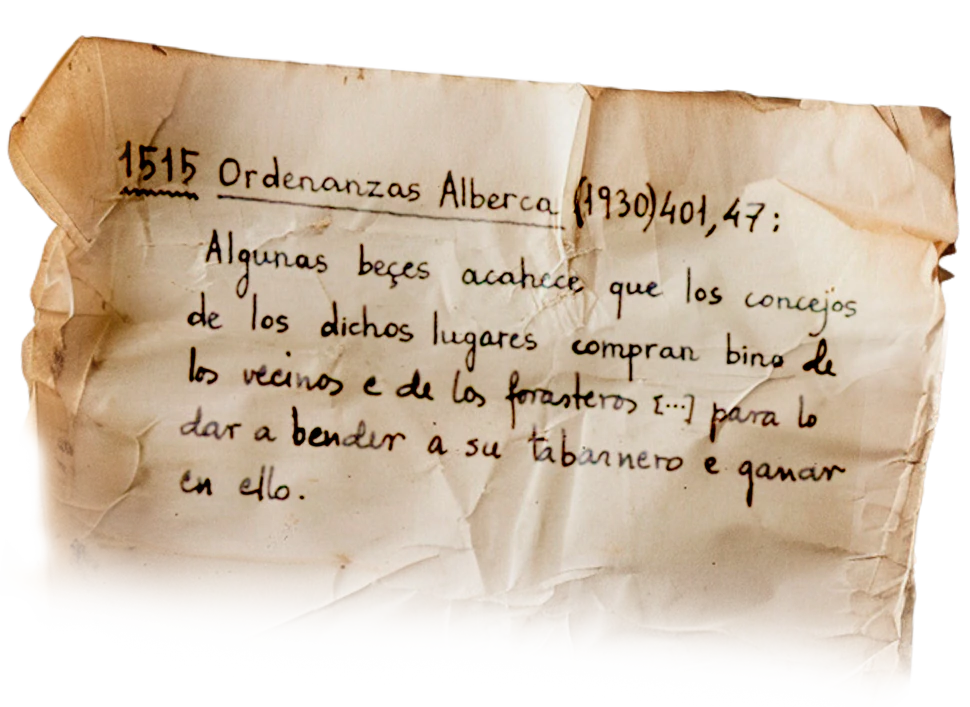
The Ordinances of La Alberca and its territories, Las Jurdes and Las Batuecas were promulgated on September 17, 1515 before its inhabitants, gathered under the portico of the church, although probably most of them had been in force for a long time before.
These ordinances were documents for the governance of this place and covered very diverse aspects: from the orderly use of chestnut groves, vineyards and beehives to the fight against blasphemy, imposing numerous penalties on those who broke them.
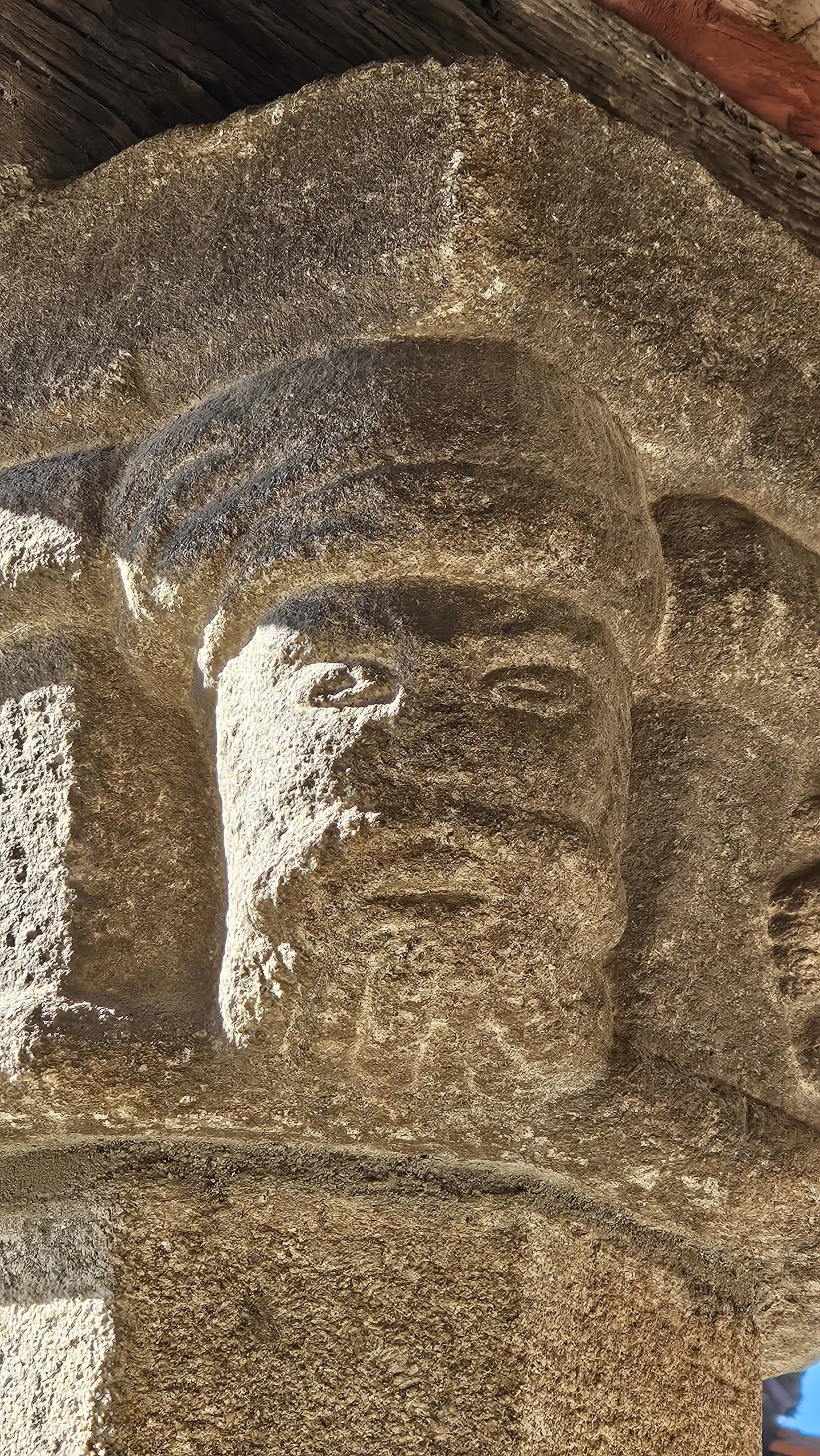
A carved stone capital in the square shows a man with a turban and curly beard, viewed by some as a blend of Moorish and Assyrian styles. Antonio Luengo Becerro.
Many authors have interpreted the architecture, clothing, traditions, and other elements of La Alberca as evidence of Jewish and Arab influences, suggesting the coexistence of these three cultures in the town. Although there is no evidence of a Jewish quarter, mosque, synagogue, or other structures to confirm this, events such as the presence of the Inquisition in the town and the holding of autos-da-fé against people who had fled suggest the existence of other cultures and religions.