


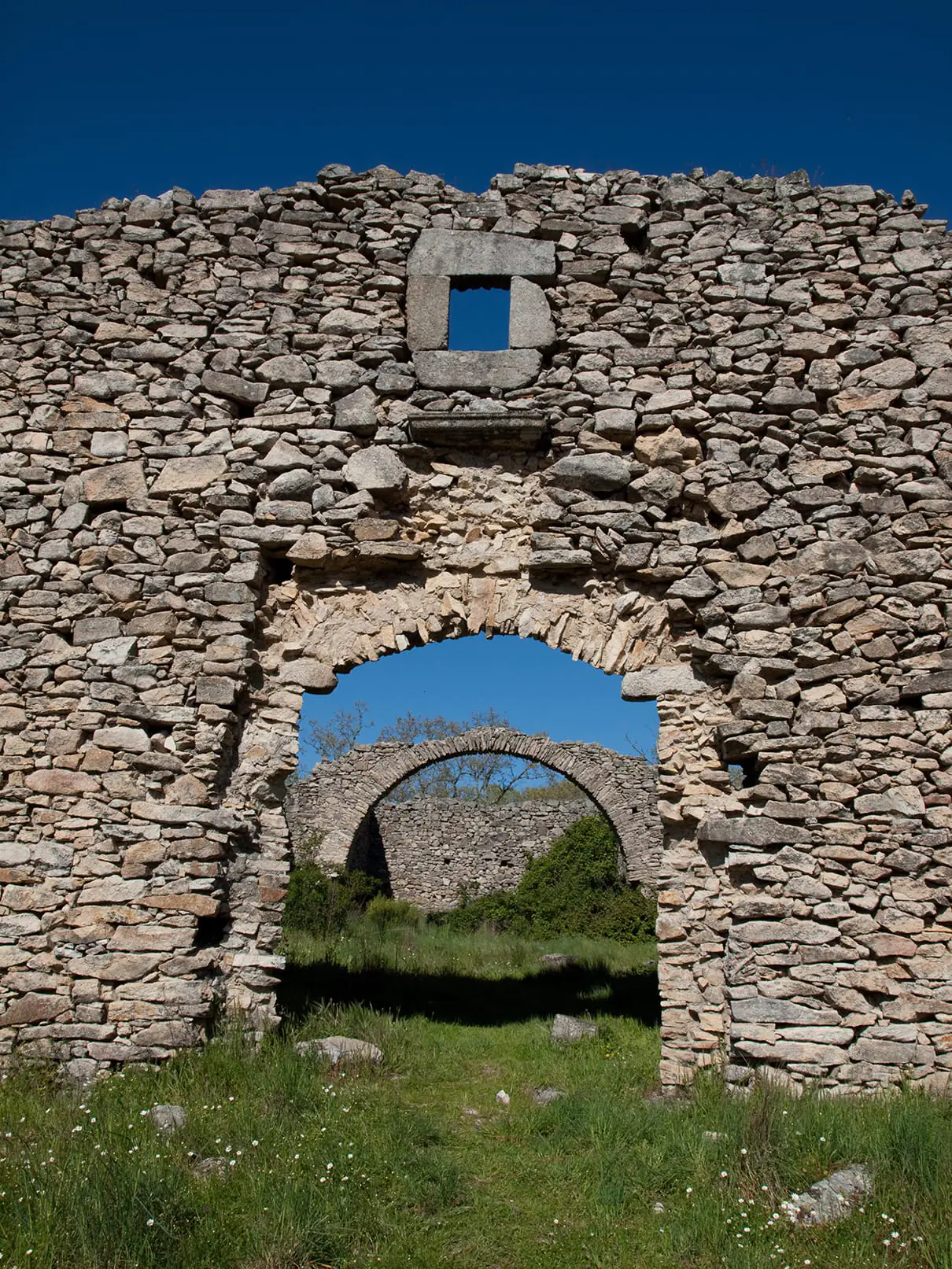

Ruins of the Hermitage of St. Mark. Antonio Luengo Becerro.
Built in 1701, this hermitage replaced the old Hermitage of St. Peter and St. Mark, which the villagers had refused to maintain due to its remote location. In 1814, the Bishop of Coria ordered the demolition of this newer hermitage as well, moving the place of worship and religious images to the Hermitage of St. Blaise and St. Sebastian.
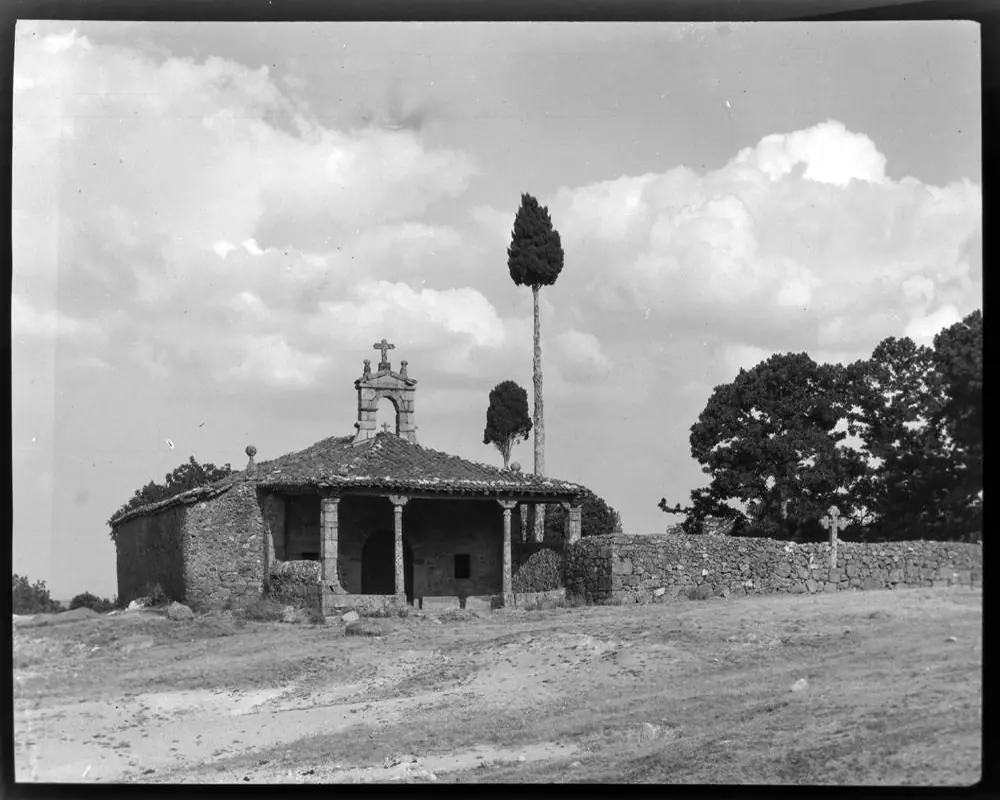
Photograph of the Hermitage of St. Blaise and the adjoining cemetery. Otto Wunderlich.
This small, now deconsecrated hermitage was originally a much larger structure that is believed to have hosted a sermon by Saint Vincent Ferrer in 1412.
After serving as a hospital during the Peninsular War, it was restored in 1814 at the expense of the Hermitage of Majadas. In 1834, a cemetery was created adjacent to the building, following a ban on burials inside the parish church.
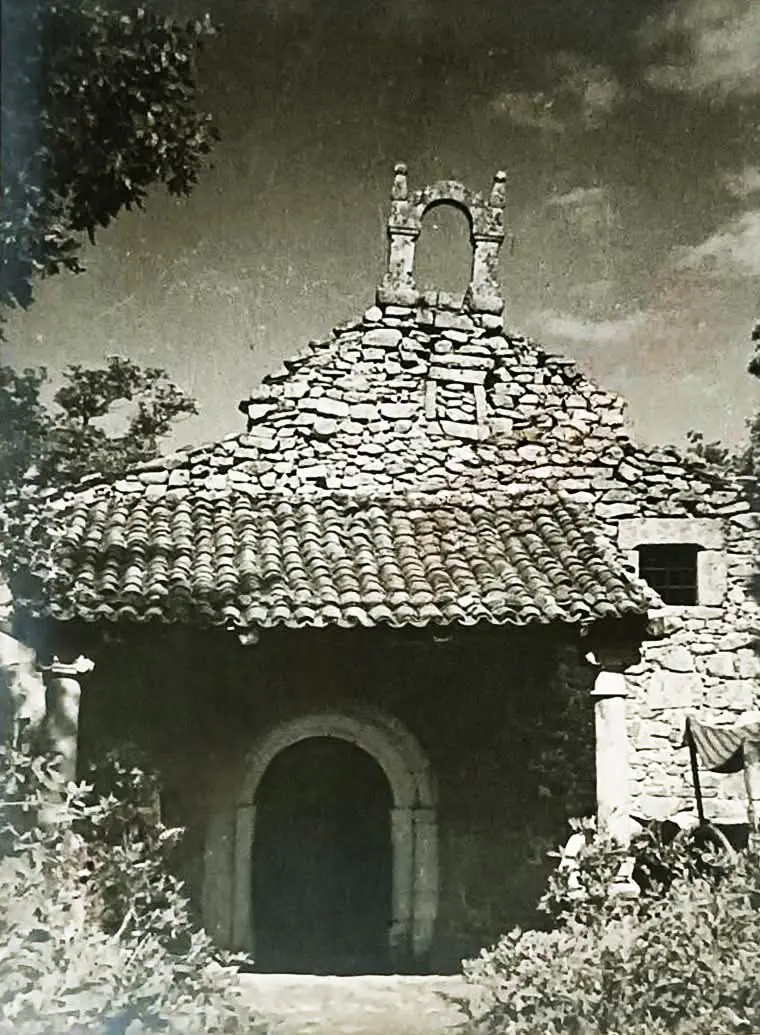
The Majadas Hermitage before its restoration.
The entryway suggests that it may be the oldest hermitage in the region. Located about two kilometres from the village, it is the site of the pilgrimage in honour of the Virgen of Majadas, a Romanesque statue that was once stolen and later recovered by local residents.
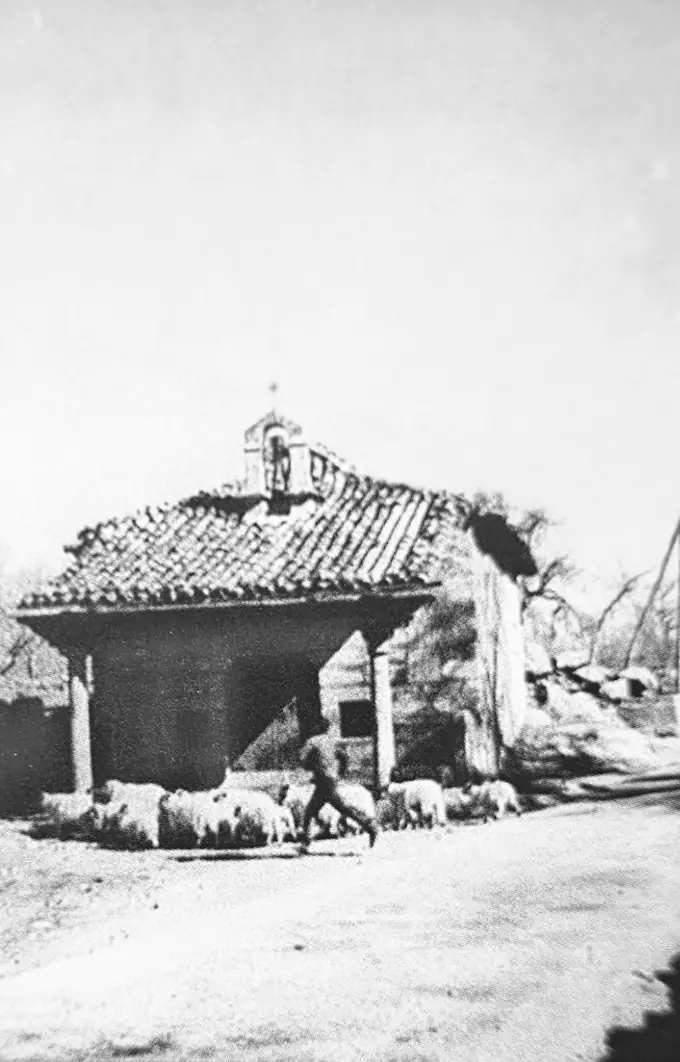
Flock of sheep near the Hermitage of St. Anthony.
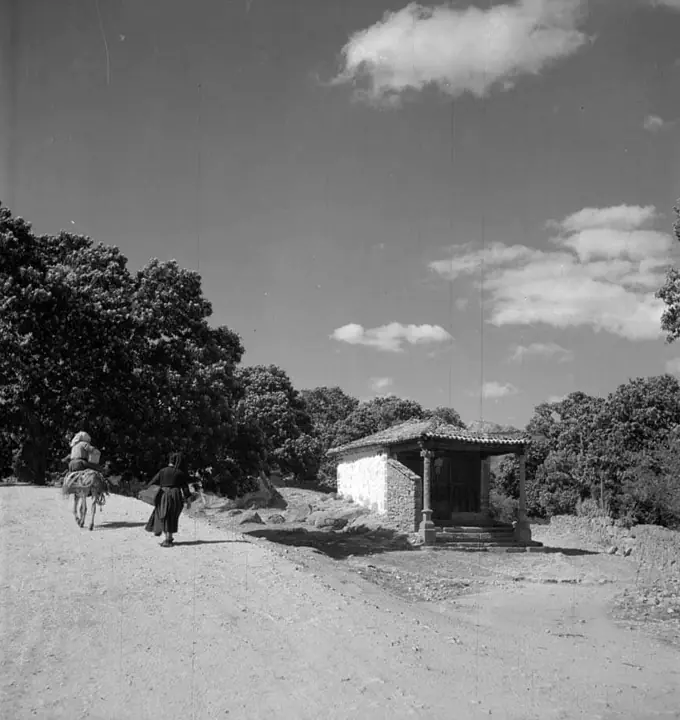
Located at one of the main entrances to La Alberca, this small chapel may belong to one of two humilladeros (wayside shrines) mentioned in 1574. In 1670, Father Antonio de Velasco dedicated it to Saint Anthony, whose image is often visited by those in search of a partner.
Old photo of the wayside shrine.
Known to the locals as El Millaero, there are references to this hermitage dating back to the late 16th century. The interior is adorned with beautifully decorated walls and features a striking depiction of the crucifixion of Christ, along with images preserved from previous hermitages.
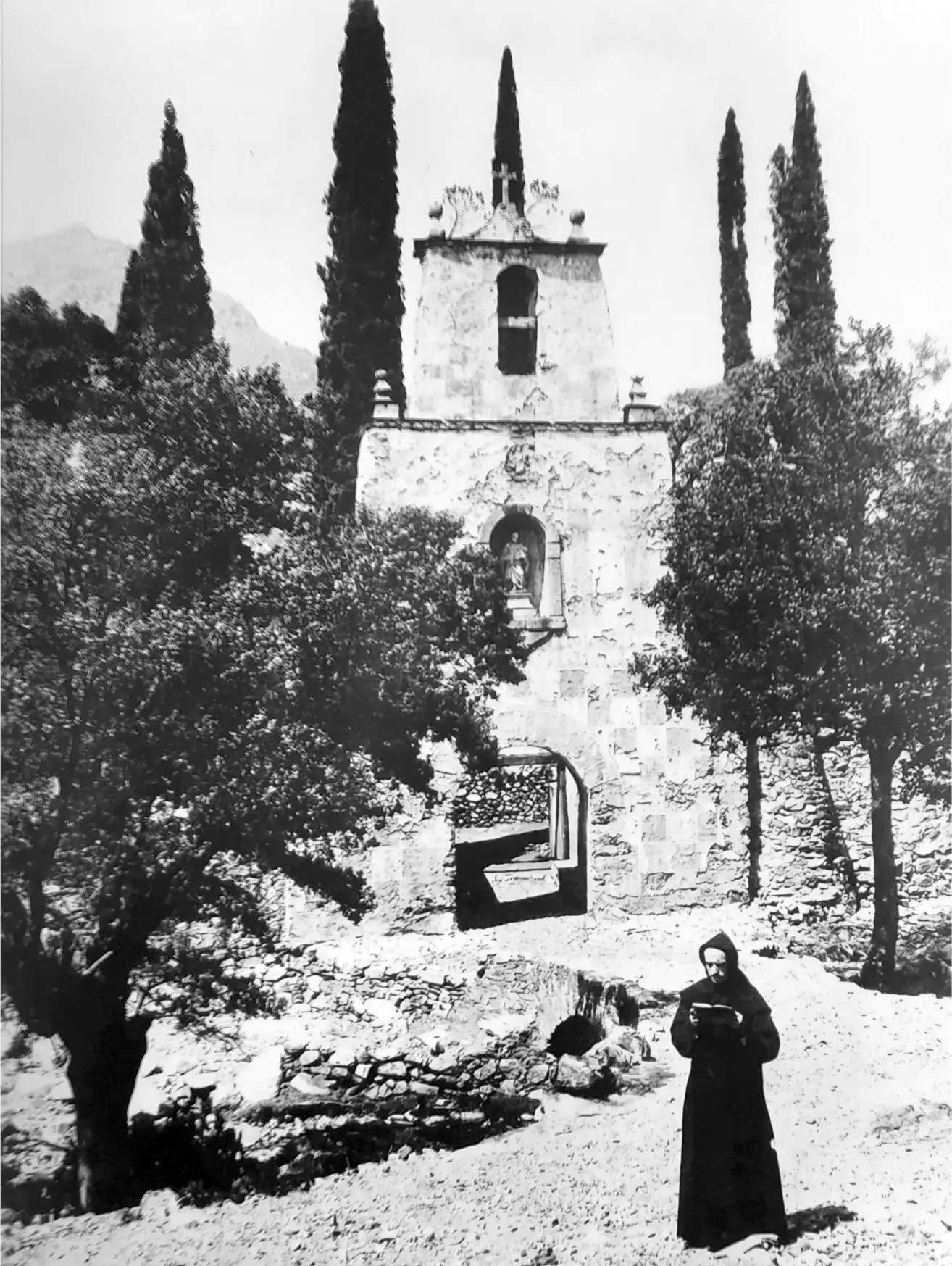
A monk at the entrance to the monastery. Kurt Hielscher.
In 1599, the Discalced Carmelites founded a cloistered monastery in the Las Batuecas valley, complete with gardens, living quarters, hermitages, a cloister, library, and church.
After a devastating fire in the late 19th century, the complex fell into ruin for years until it was eventually rebuilt.
Saint Maravillas of Jesus and Father Cadete, who famously lived in a hollowed-out cork oak, once resided here. The retreat also welcomed visitors such as King Alphonse XIII and Luis Buñuel, who reportedly considered buying the property.