


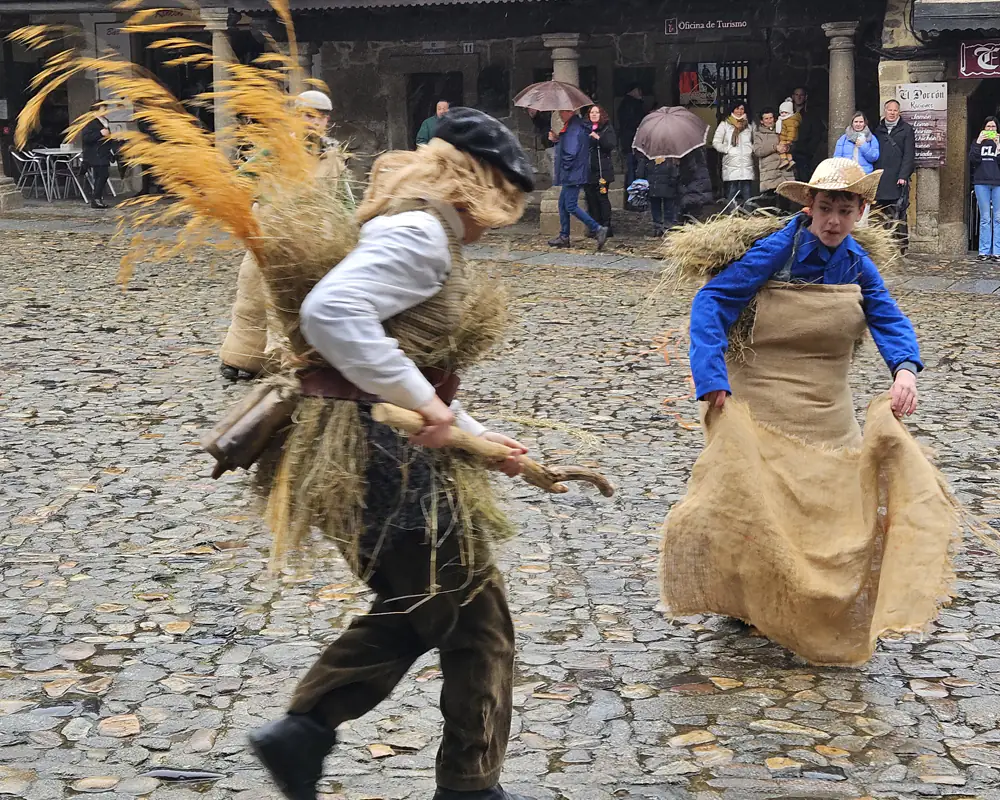

Mozotoro and patahenos (masked Carnival figures). Antonio Luengo Becerro.
Carnival in La Alberca is led by a cast of colourful characters known as maragatas, ensabanaos, majos, mozotoros, and patahenos, who fill the streets with joyful noise and eye-catching costumes. Echar el limón, an unusual local dish featuring orange, lemon, chorizo, garlic, salt, egg, wine, and oil, is traditionally served during Carnival.
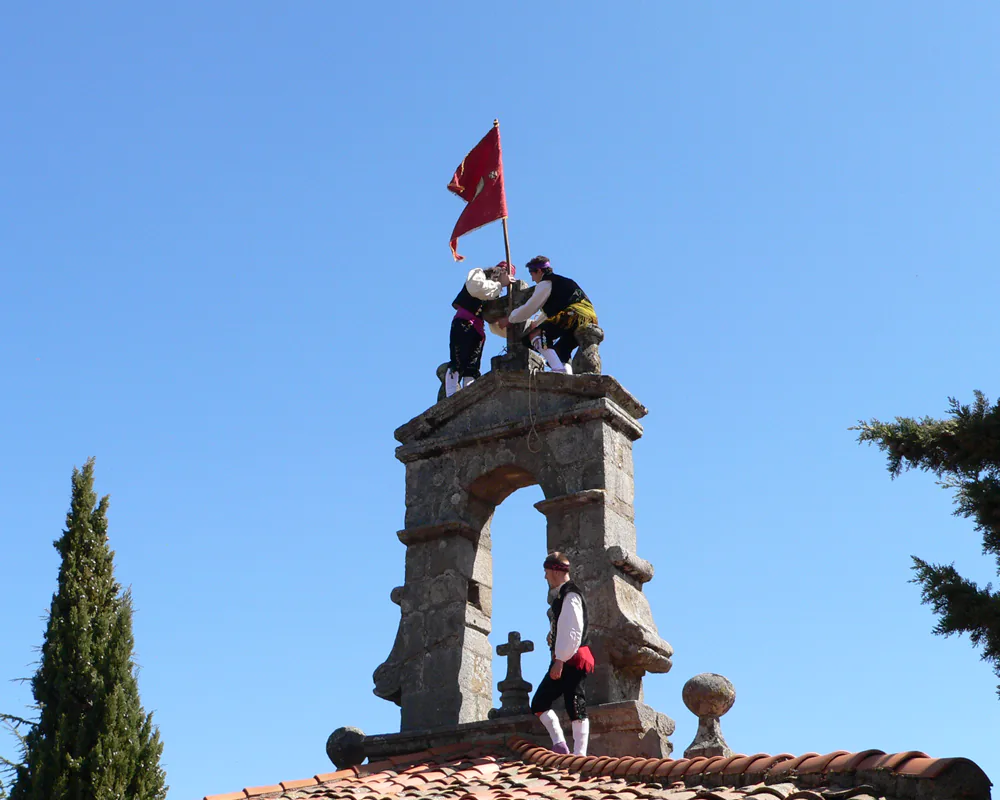
Quintos (young male townspeople) raise the banner on the bell gable of the hermitage. Antonio Luengo Becerro.
On Easter Monday, the pendón (banner) that was seized by the women of the village from Portuguese troops at Las Matancias, is raised on the bell gable of the hermitage of St. Blaise. The celebration features traditional dancing, games, and hornazo (meat-stuffed pastry).
An ancient decree by the Duchess of Alba ordering the commemoration of the victory may explain the tradition of drinking wine on the Día del Trago. Another theory is that it stems from a reciprocal offering from downstream villages to thank La Alberca for allowing mountain waters to flow their way.
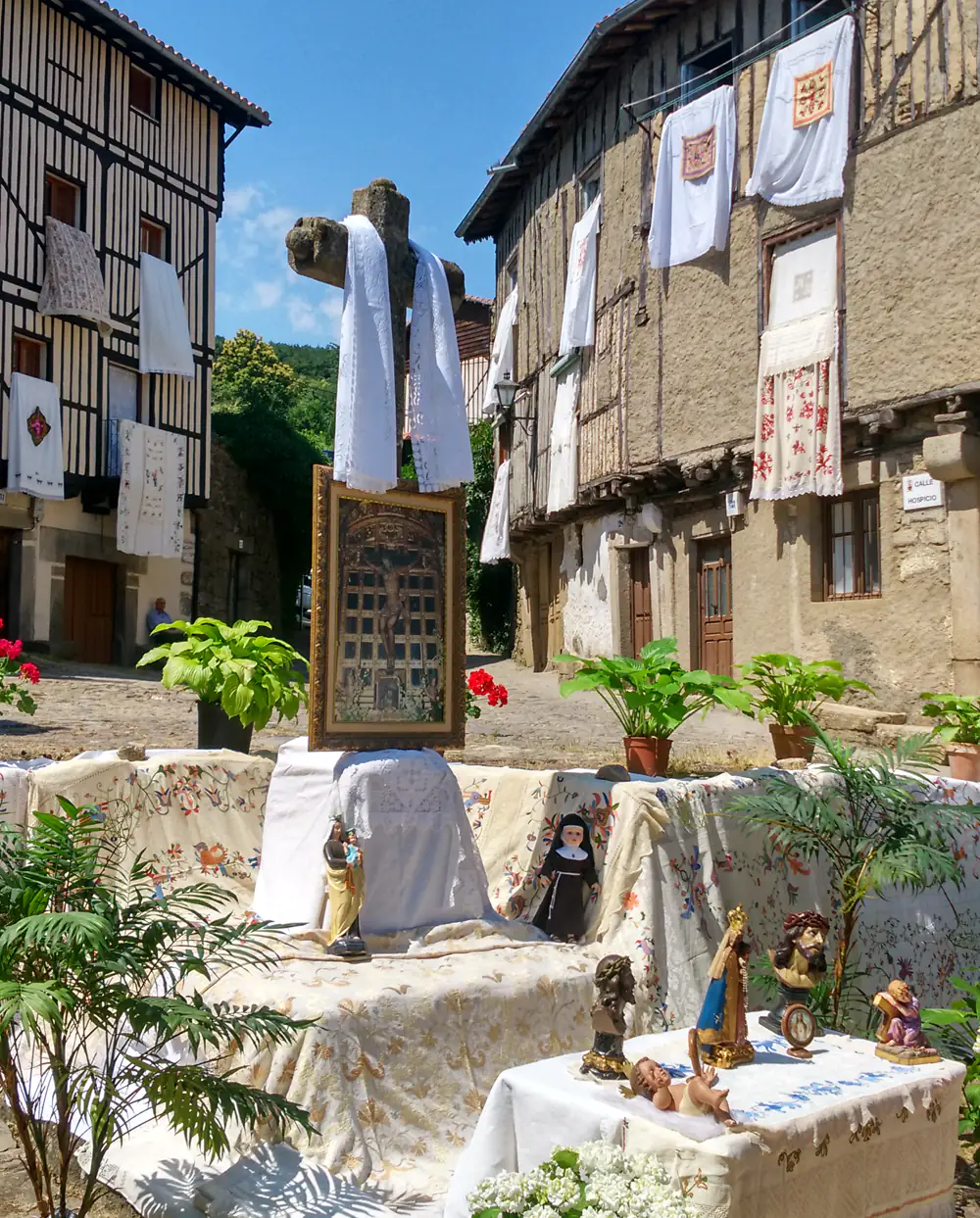
A Corpus Altar. Antonio Luengo Becerro.
Following the procession led by the Blessed Sacrament through the streets decorated with embroidered cloths and altars, the town’s confraternity holds an offertory in the Solano Bajero square, where traditional costumes can be admired. These same confraternity members continue to celebrate the ancient Minerva tradition in the church each month.
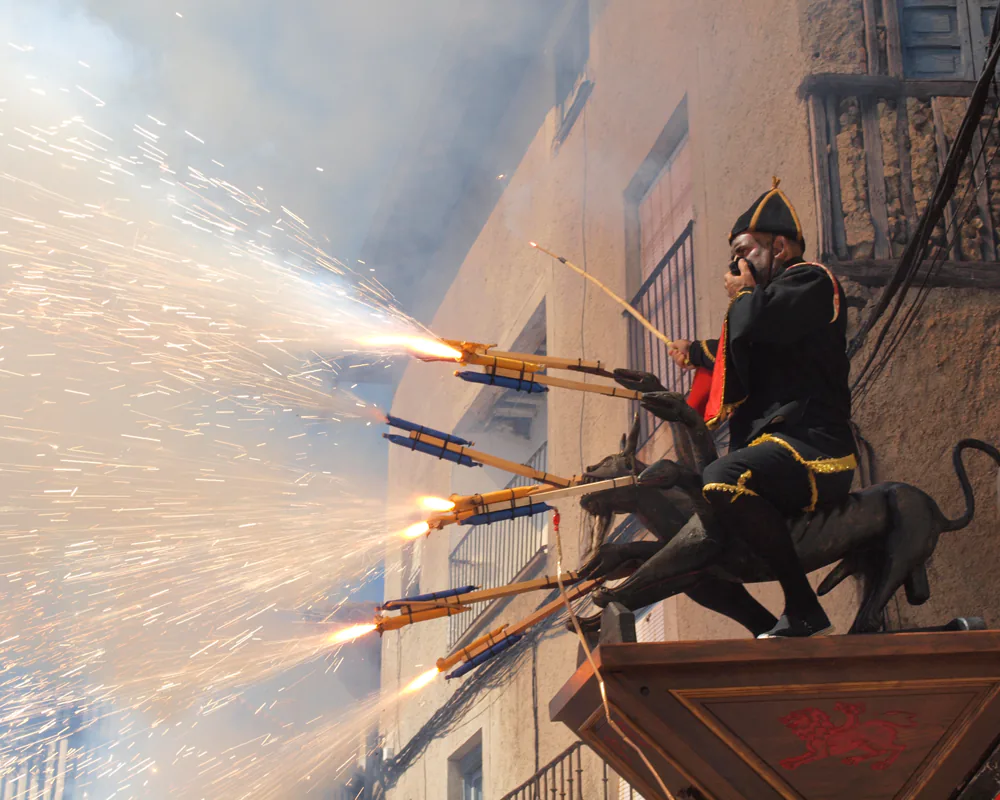
A fire-breathing dragon in the performance of La Loa. Antonio Luengo Becerro.
Following the High Mass on Diagosto, a vibrant procession of dancers, festival officials, local authorities, and worshippers accompanies the Virgin of the Assumption to the town square. The solemn offertory takes place following a strict ceremonial protocol.
There are traditional dances featuring different steps and paleos (ritual movements), and the symbolic act of weaving and unweaving the ramo (floral arch). The next day, La Loa in Honour of Our Lady of the Assumption is performed at Solano Bajero square. The Loa is a theatrical performance in which the devil, riding a seven-headed dragon, attempts to stop the townspeople from honouring the Virgin.