


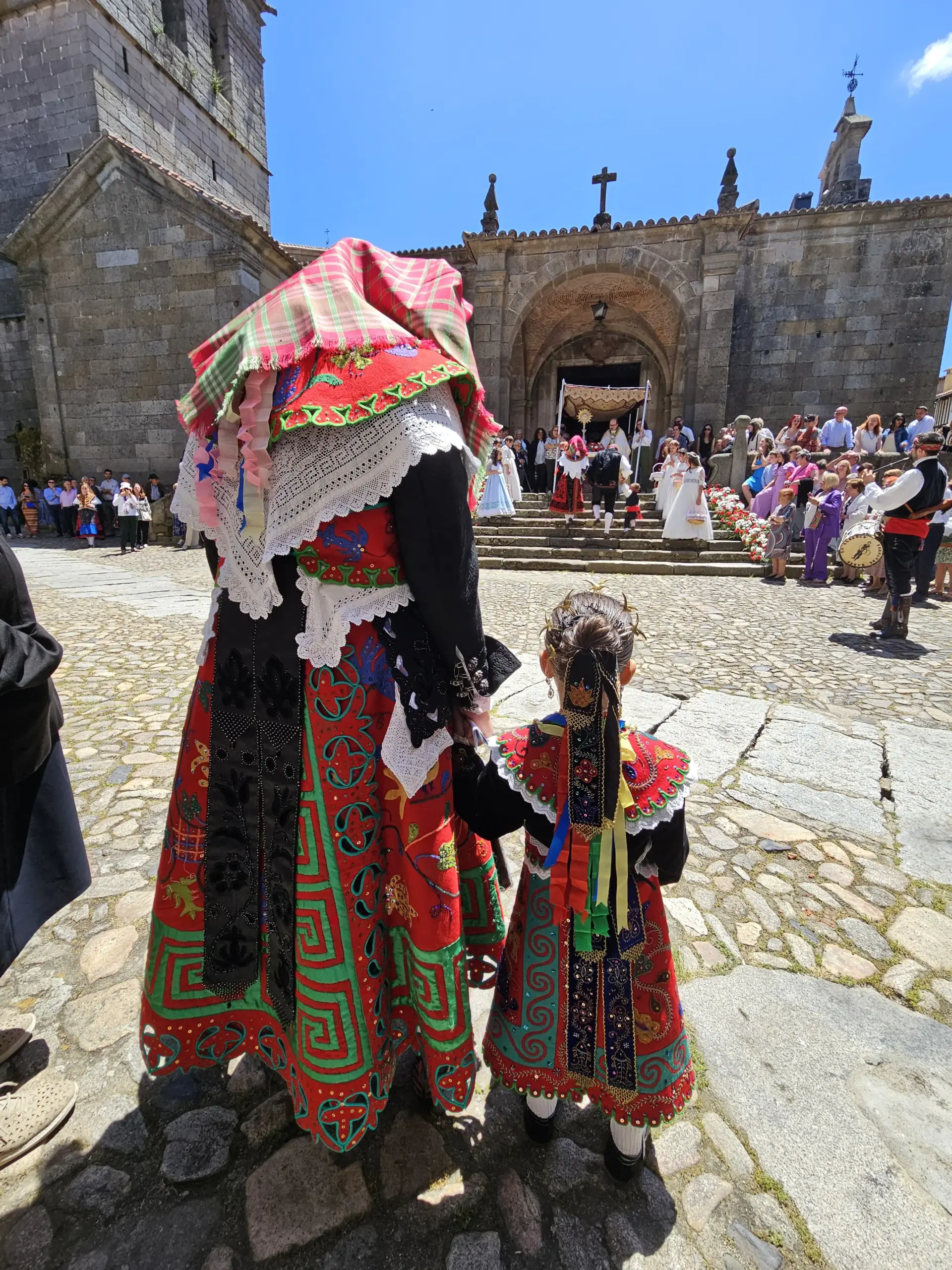
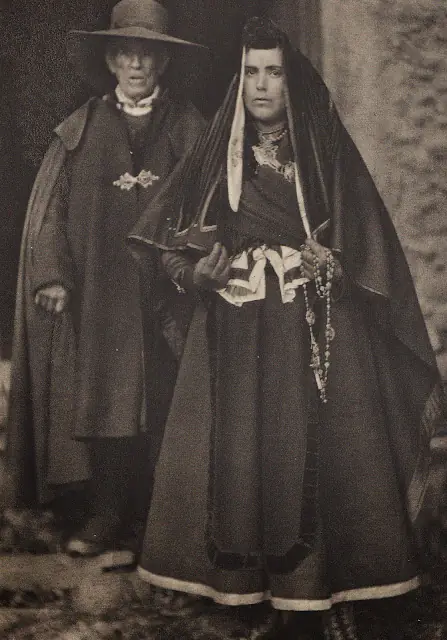

Woman and girl wearing dagalejos. Antonio Luengo Becerro.
Worn by young women, or zagalas, which is where the name comes from. Some women wear a loose scarf draped over the head, although it’s more common to see the hair tied up in a bun and secured with a hairpin.
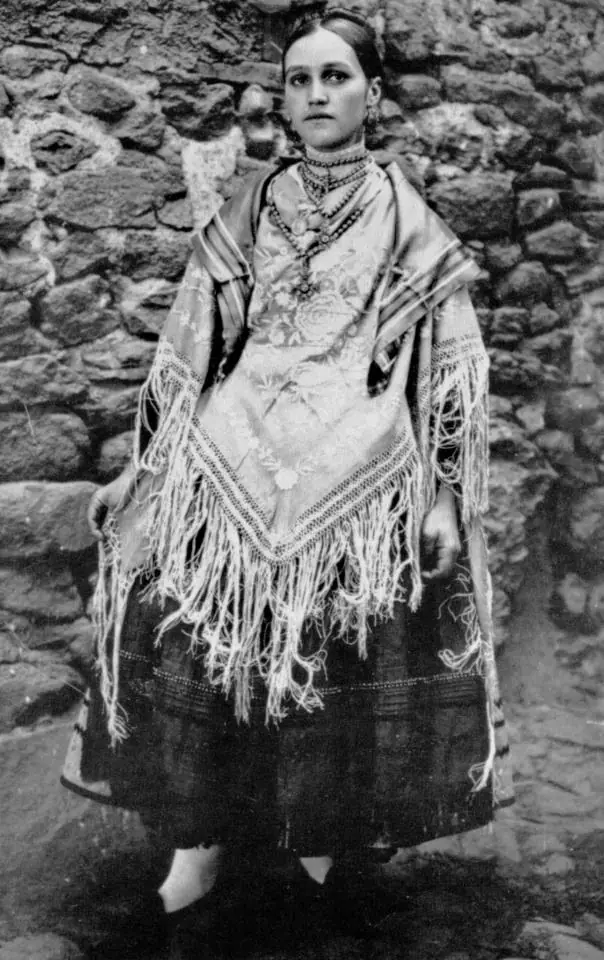
Young girl wearing a saya. Kurt Hielscher.
The wide, colourful saya skirt is paired with a Manila shawl adorned with gold threads.
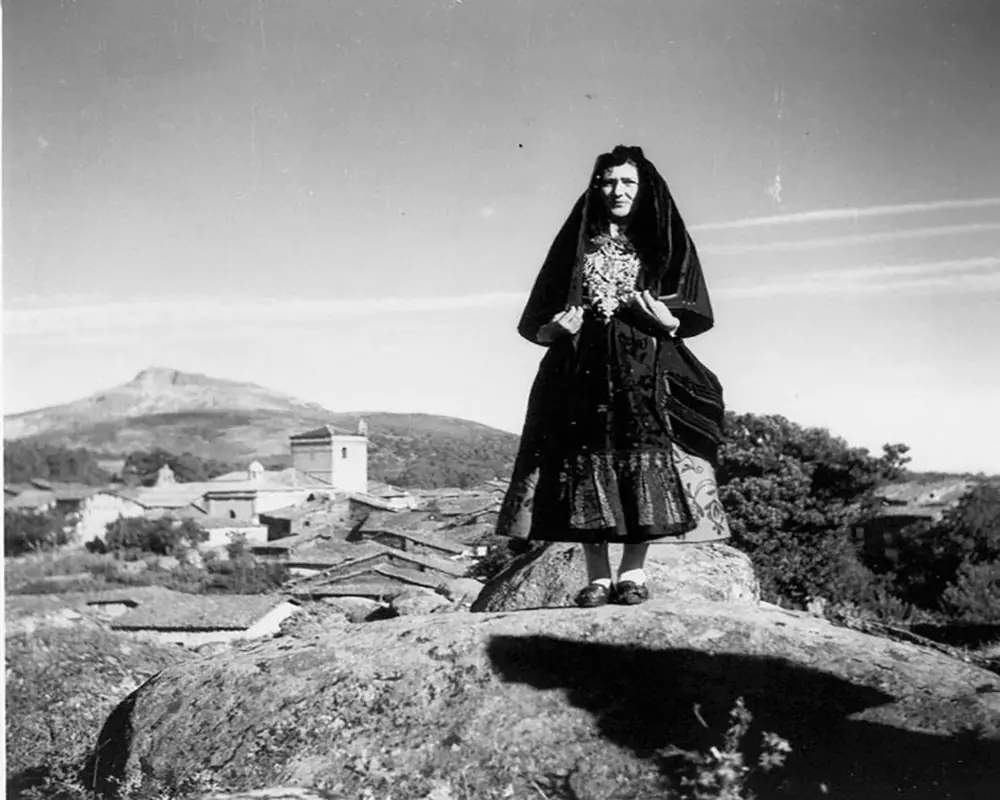
Albercana de manteo. Kurt Hielscher.
Austere yet elegant, it is worn on special occasions, typically by festival officials and maids of honour.
Woman wearing a ventioseno and man wearing an anguarina.
Lesser known and worn less frequently, it is traditionally worn by older woman at funerals, religious ceremonies, or community celebrations led by festival officials.
Girls wearing vistas. José Ortiz Echagüe.
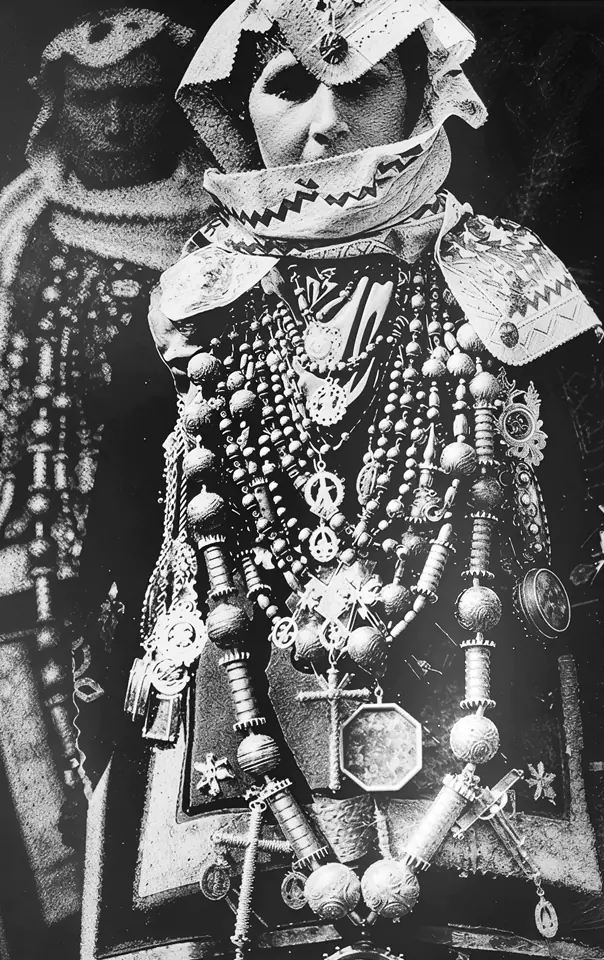
Reserved for major celebrations, this is the most famous of all the traditional costumes. It is accessorised with an abundance of jewellery made of silver or coral—never gold—which can weigh up to 14 kilos.
This striking costume was chosen by Sorolla as one of the most iconic in Spain; Lorca featured it in a theatrical production; and María Callas wore an adapted version in the opera Medea. It has appeared in films and continues to grace the pages of top international fashion magazines to this day.
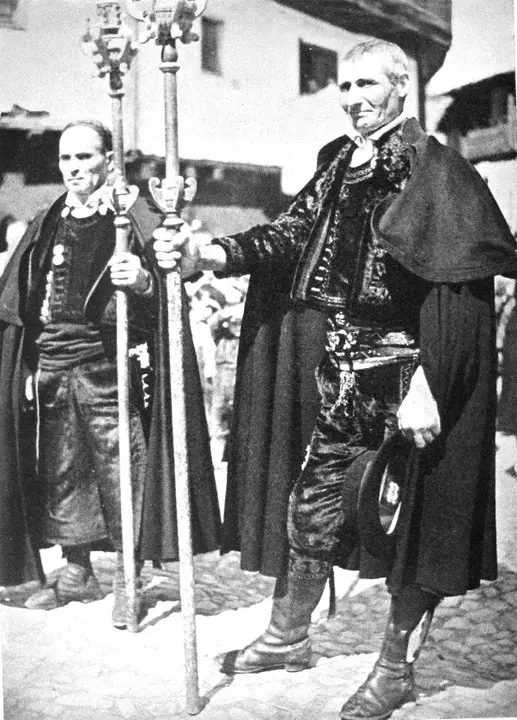
Festival officials on Diagosto.
The knee-length trousers and vest of the traditional men’s outfit feature beautiful silver mountain-style buttons, while the shirt is fastened with ornate gold Turkish buttons.
Men may also wear an elegant blouse over the vest, and on special occasions, a jacket with silver clasps. The festive ensemble is worn with leggings over woollen socks, a wide-brimmed black hat, and a long mountain-style cloak.
It can also be paired with an anguarina, a mid-length coat fastened with a silver brooch.