



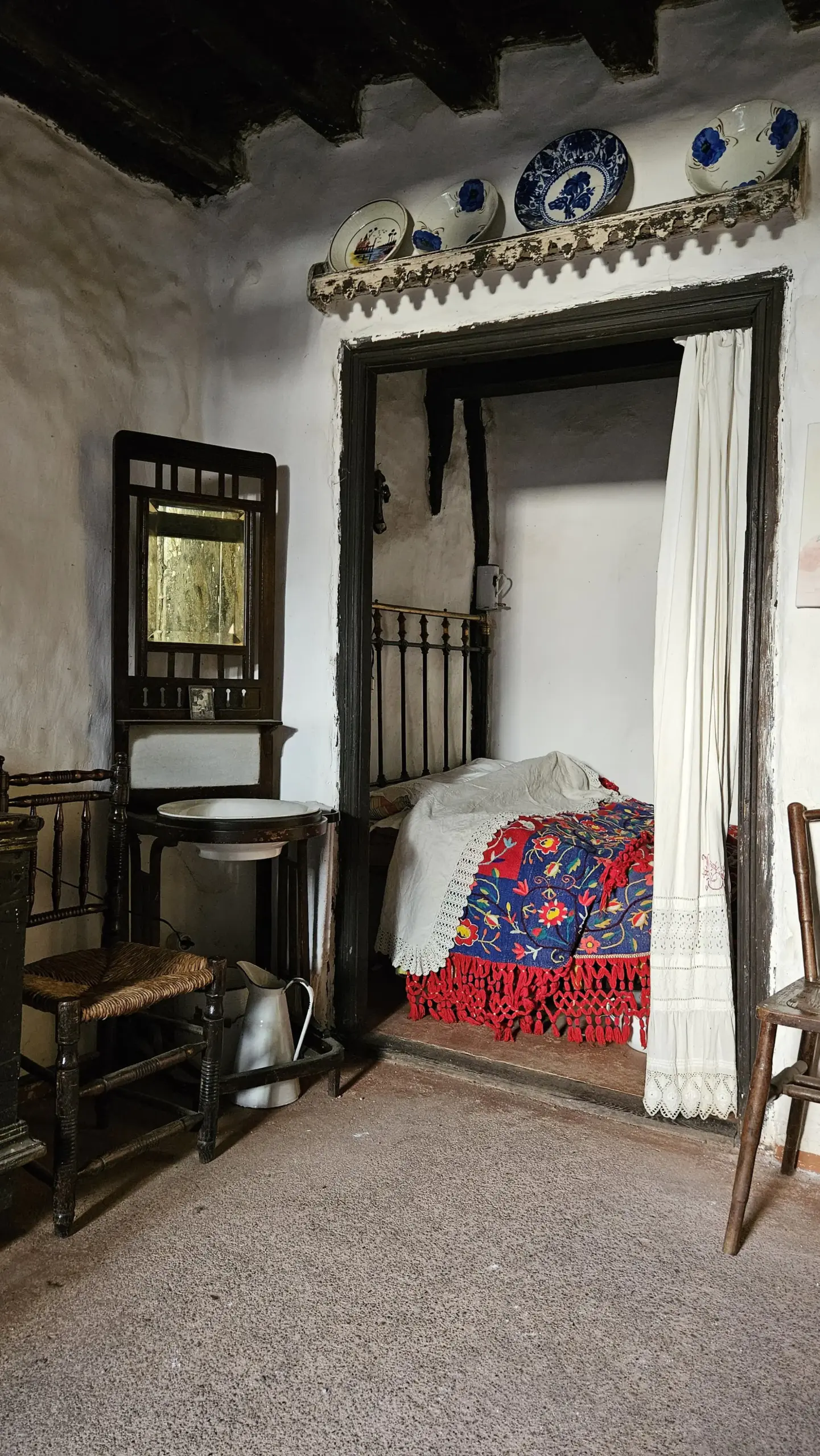
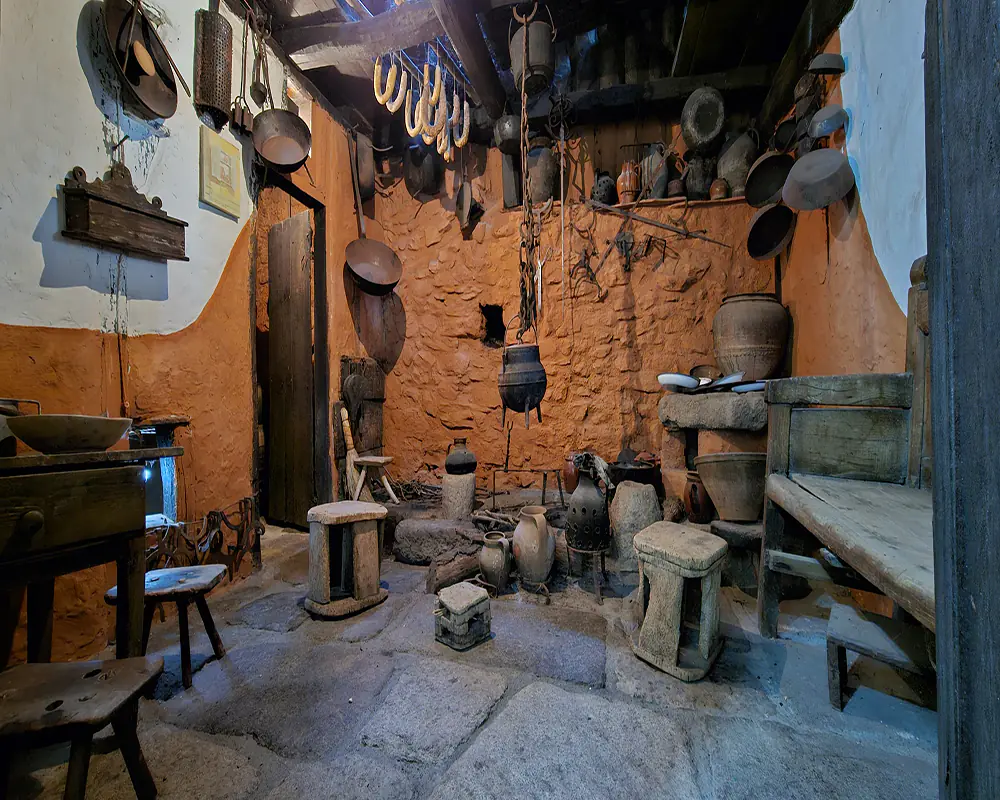
A bedroom. Casa-Museo Satur Juanela. Antonio Luengo Becerro.
Each room in a traditional house in La Alberca was carefully adapted to the daily needs of its inhabitants.
The animals were kept in the stable on the ground floor. The animals provided food for the household as well as manure for the fields and warmth for the upper floors. Next to the stable there was usually a cortinal, a kind of courtyard with trees.
The living quarters were on the second floor. The “lantera” or good room faced the street and was used for special occasions and family events. At the back, overlooking the cortinal, was the back room or everyday living area for daily use.
On the third floor there was typically a large open space called the campocasa, a multi-purpose central area from which the other rooms branched off. The campocasa came in handy for weddings and religious feasts, and even for practical tasks like pig slaughtering and sausage-making.
The cuarto salaero, or salt room, and the kitchen were also located on this level. The kitchen was the heart of the home, centred around a hearth in the middle of the room. Chimneys didn’t exist in La Alberca; instead, the smoke was used to cure the sausages and dry the chestnuts to turn them into pilongas (dried chestnuts).
Cured meats and dried chestnuts are two products that have long played a vital role in La Alberca’s economy, helping families survive hard times. Today, they are both a symbol of the village’s identity and an important source of income for locals.
This floor also featured the solana, a long, open balcony typically facing south or east.
Finally, located at the top above all the other rooms was the “sobrao,” located in the space just beneath the roof. This multifunctional loft served as a storage place for food, hay, tools, and odds and ends. It could also double as a workshop, and in some cases, it housed the oven where bread was kneaded and baked.