


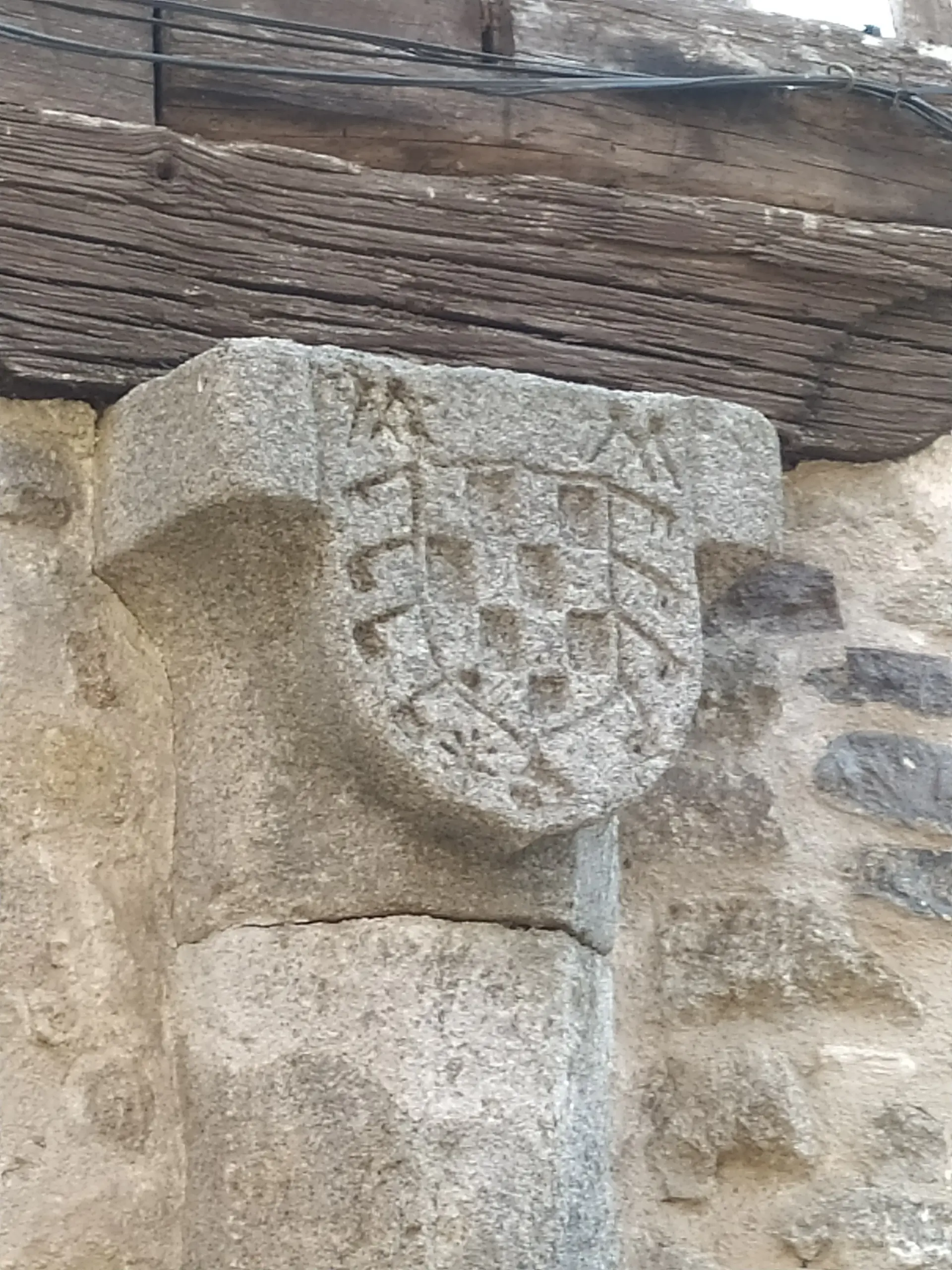
El escudo de los duques de Alba en un capitel del teatro.The coat of arms of the House of Alba carved into a capital on a theatre column.
The building that now houses the theatre was once the residence of the Dukes of Alba. The capitals on its columns are carved with pomegranates and allegorical figures representing vices and sins.
After serving as a meat market and even a military barracks, it went back to being a theatre in 1919.
The architect, Ricardo Mateos, designed a beautiful theatre which was restored at the end of the 20th century.
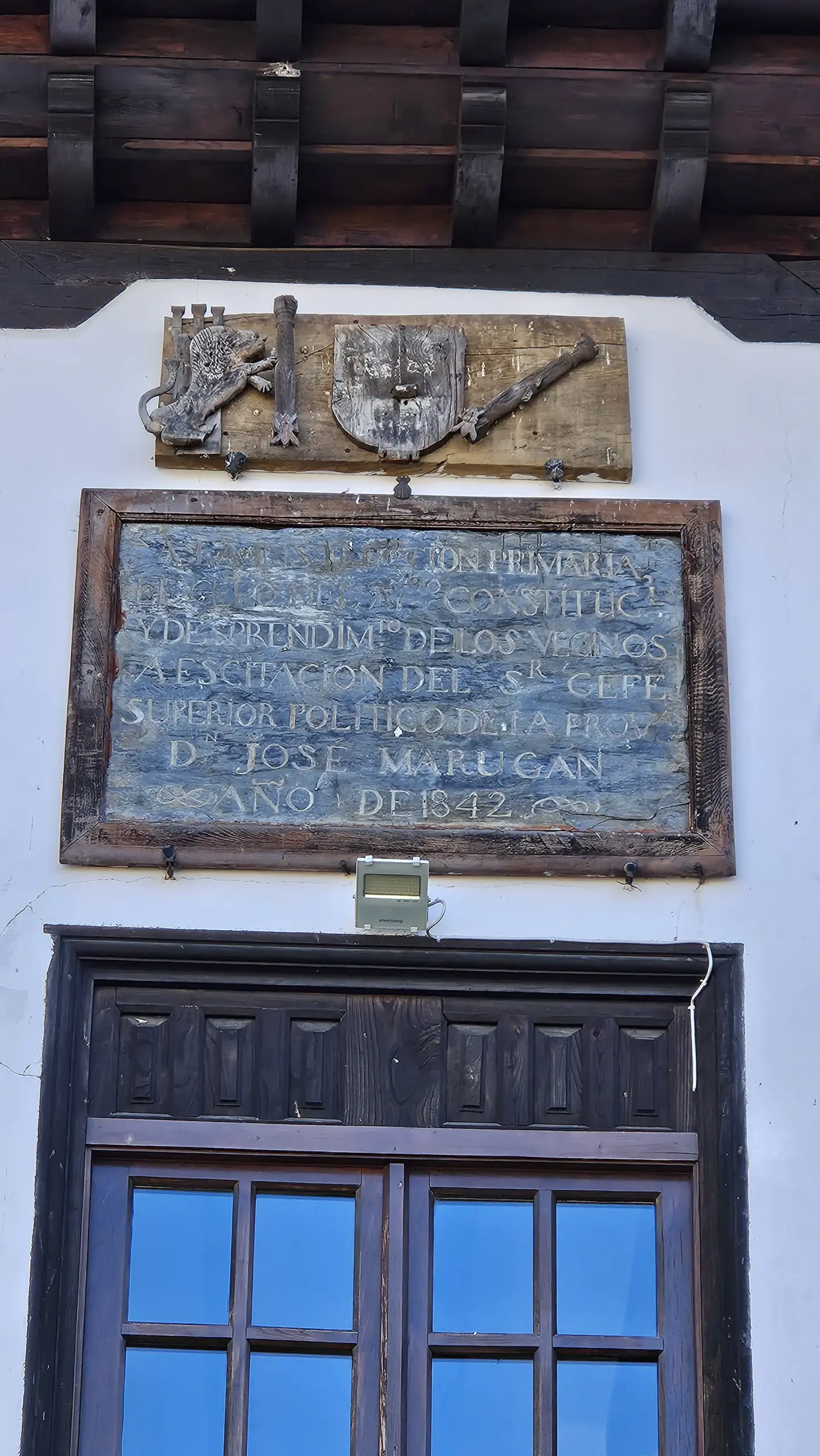
Coat of arms of Spain and 1842 inscription on the old schoolhouse. Antonio Luengo Becerro.
The building located on the side of the square opposite the stone cross once housed La Alberca’s original schoolhouse.
It was used until 1934, when the current school was inaugurated.
On 24 June 1922, the school building was converted into a dining hall for King Alphonse XIII during his visit.
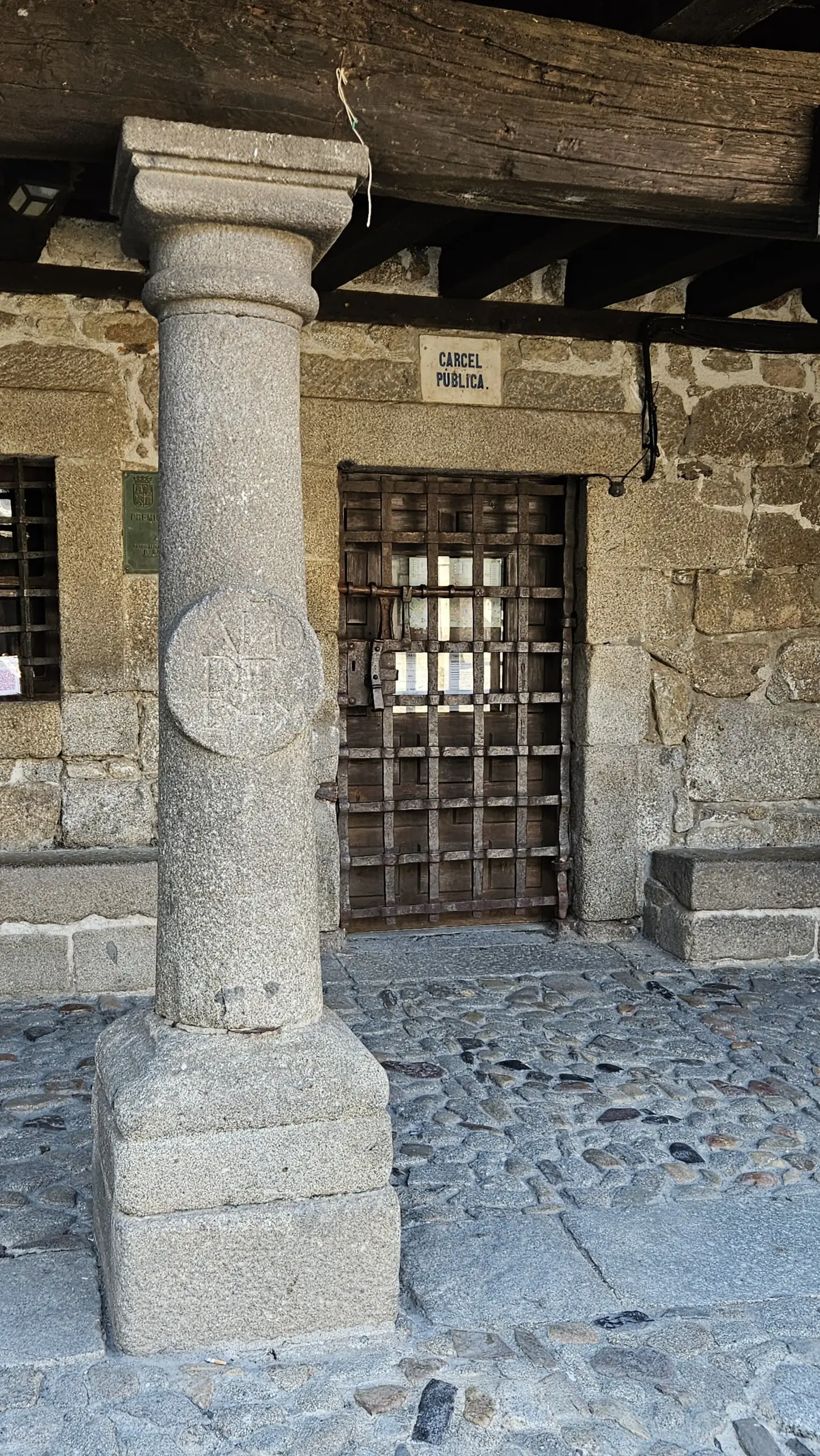
Town Hall building: arcade and former jail. Antonio Luengo Becerro.
As early as 1636, there are records that mention the presence of a Council House and Town Hall in La Alberca.
It was probably located on the same site as the current building that dates back to 1757.
On the lower level is the old village jail, complete with its original iron bars, which has been repurposed as the Tourist Information Office.
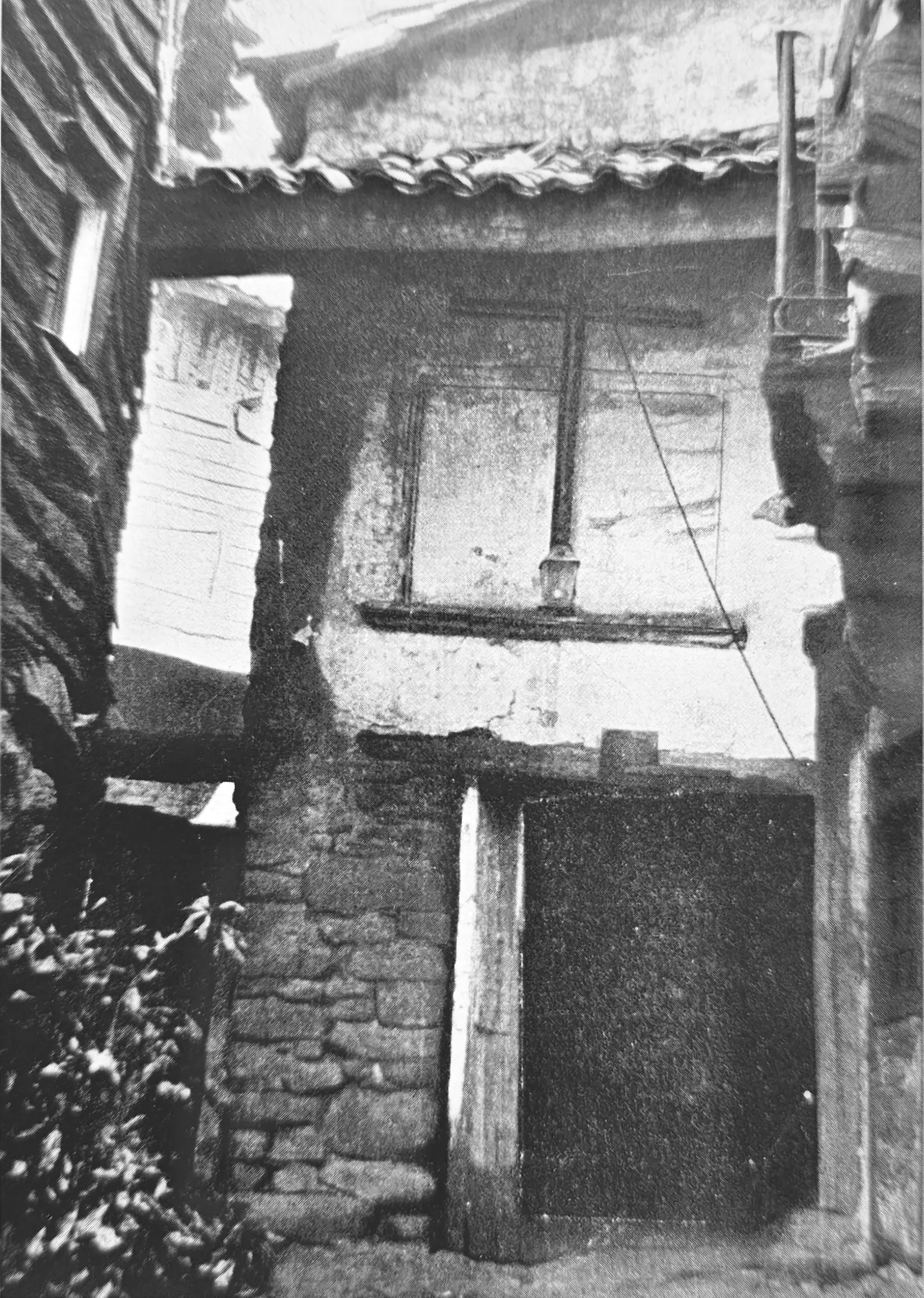
The hospital with its cross and lantern. Lorenzo González Iglesias.
Mentioned in documents dating back to 1549, the hospital was known to have beds and rooms “for the shelter and care of many pilgrims and the poor.”
It was still in use in the first half of the 20th century, mainly serving as lodging for travellers.
A wooden cross on the façade honours the original hospital, which was always lit by a lantern.
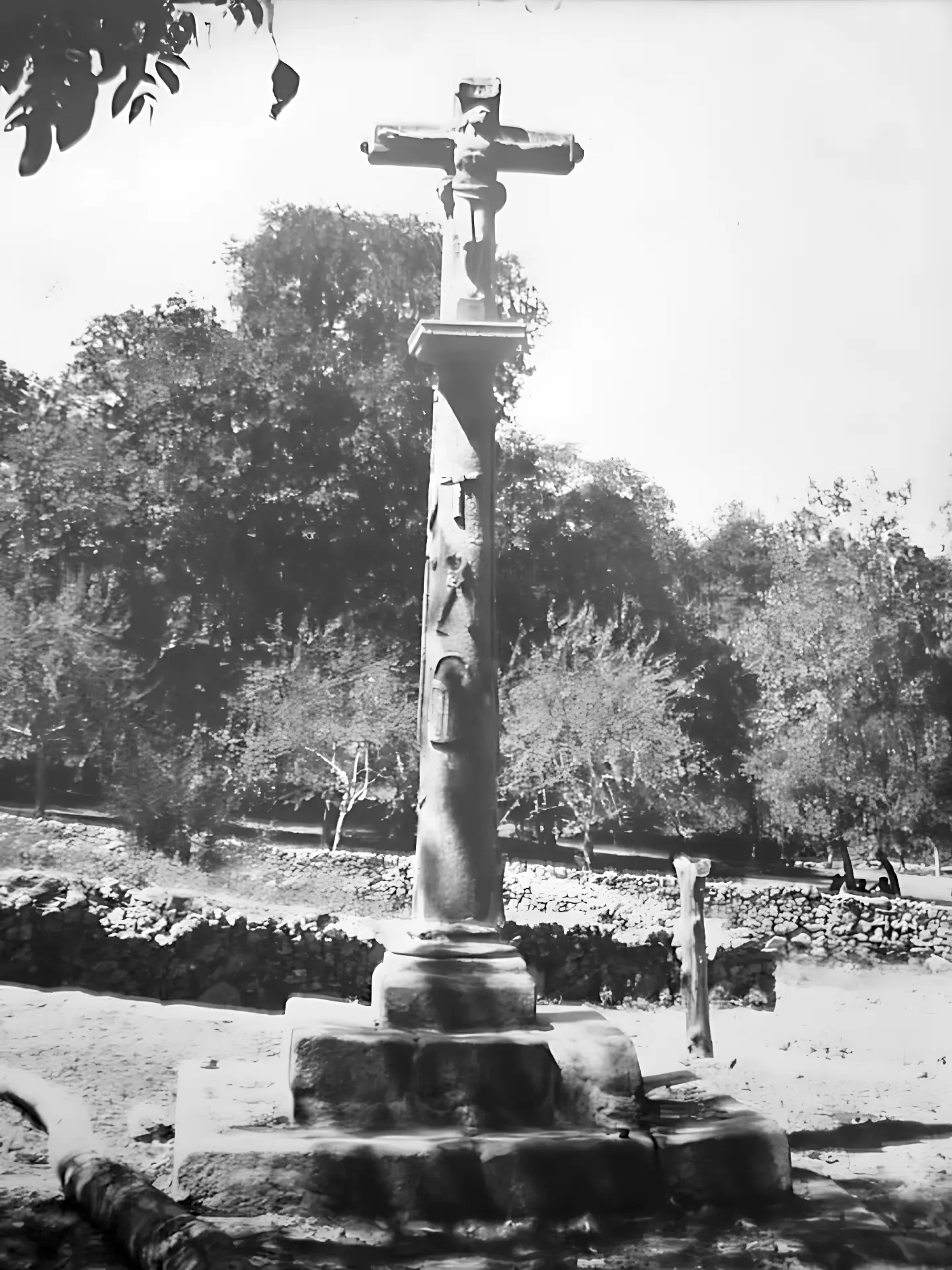
The cross in its original location on Calle Tablao.
The stone cross (crucero) that now stands at the centre of the square was originally located at the end of Calle Tablao. In 1928, a violent windstorm knocked it over, breaking the cross into several pieces.
It was restored and remained in its original spot for a few more years until it was eventually moved to the village square.
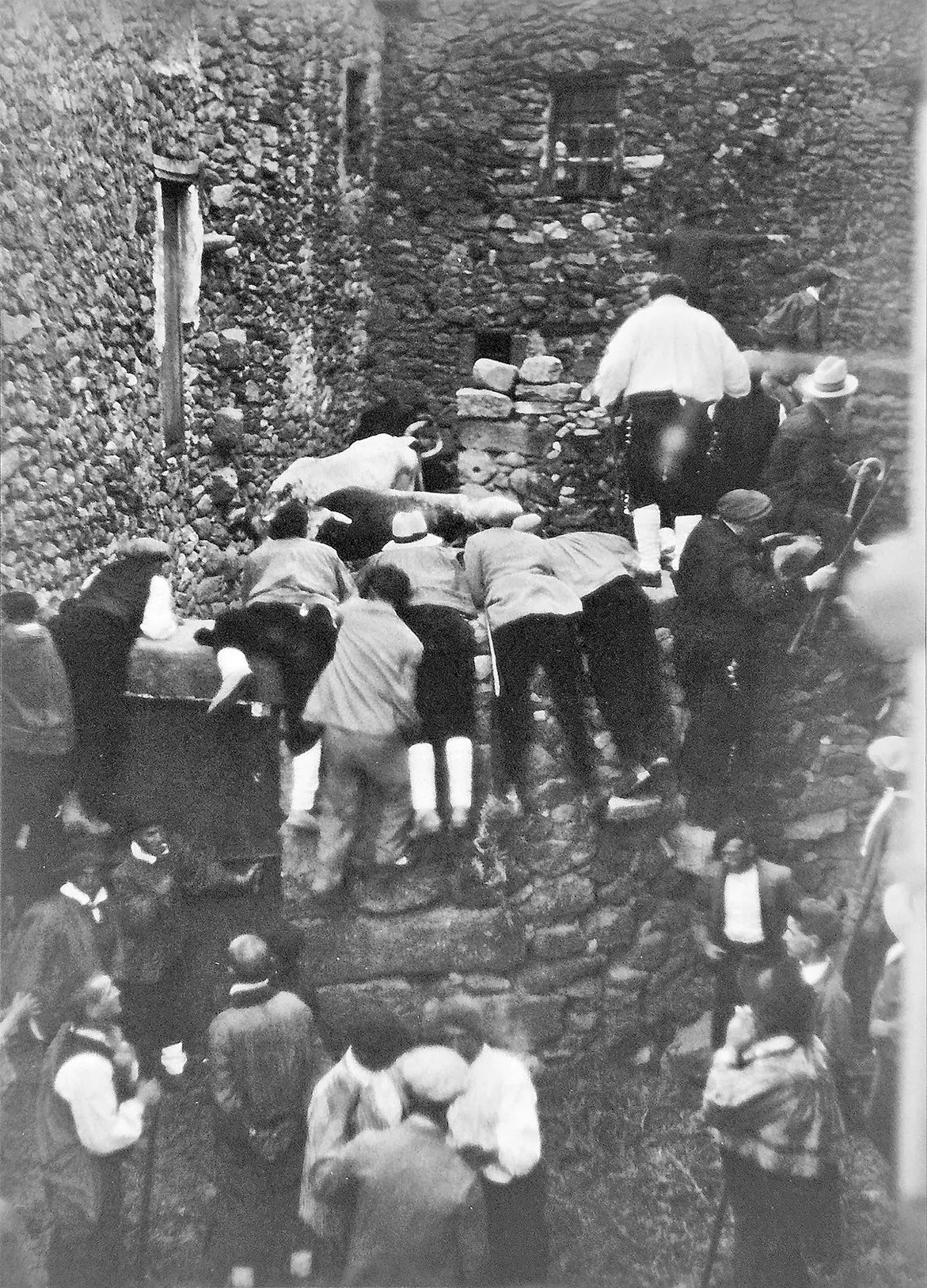
Watching the bulls in the holding pens. Ruth M. Anderson.
Next to the theatre, a small alley leads to the Corral Concejo, an enclosure that, along with another one located outside the village.
It was used to hold livestock that had escaped or caused damage.
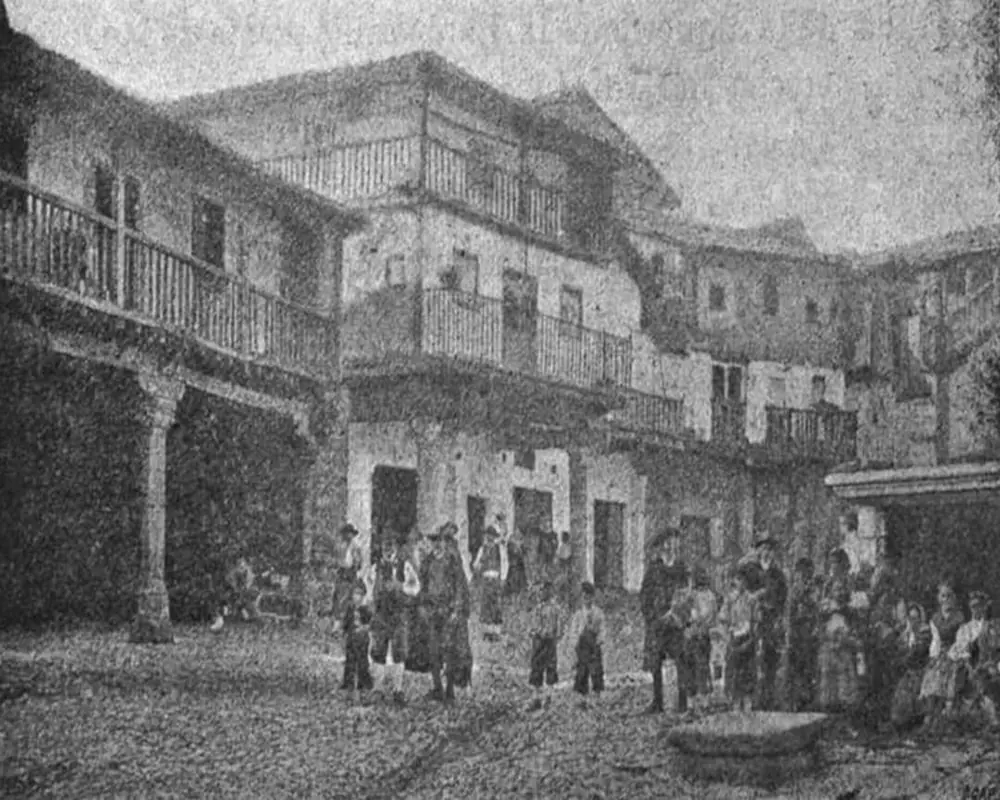
The Fuente Grande was a beautiful ashlar-stone fountain featuring a cornice and steps on three sides.
In centuries past, criminals were publicly displayed there as a form of punishment.
Another iconic fountain was the Fuente Redonda, more commonly known as El Pilarito, named for its small, low basin (pilón).
Currently, water flows in the square from a beautiful fountain located at the foot of the cross.